Who is mobilising, funding and amplifying France’s October 2026 protest wave—and what is actually proven?
Governing question · Paris investigation V2 · 23 October 2026
Tests four different propositions separately: participation in demonstrations, organisational mobilisation, historical funding relationships, and deliberate coordination or foreign interference. Presence in the same protest ecosystem is not treated as proof of common command.
Actor cluster · confirmed participation does not imply unified control
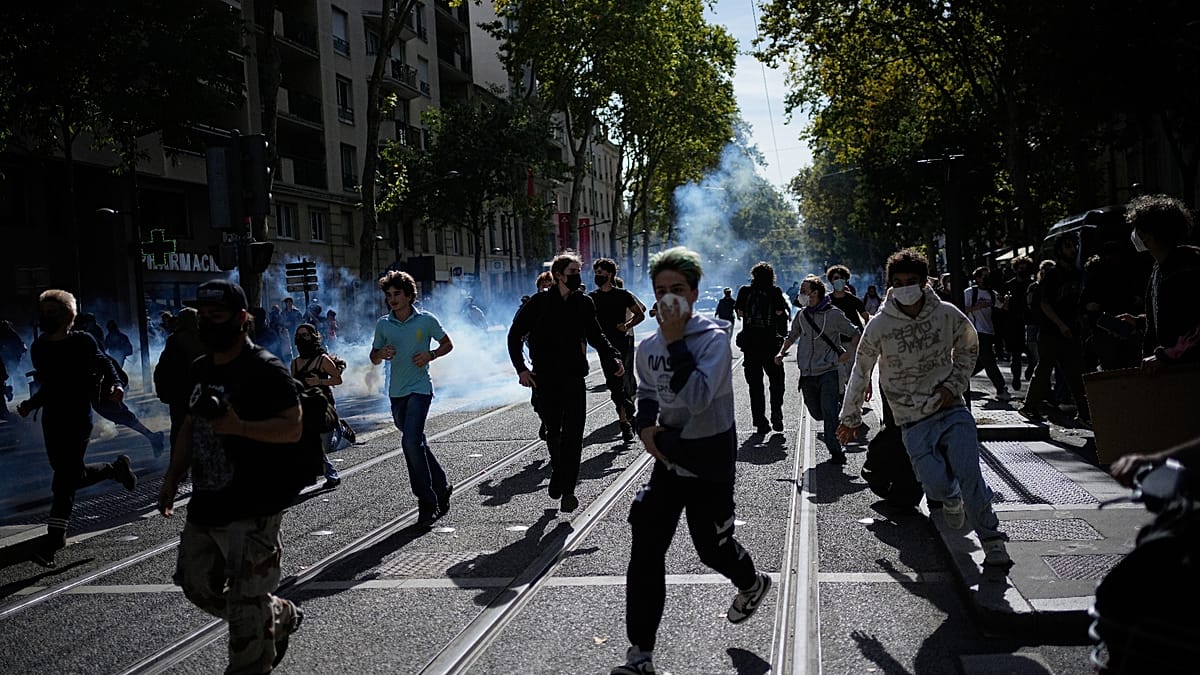
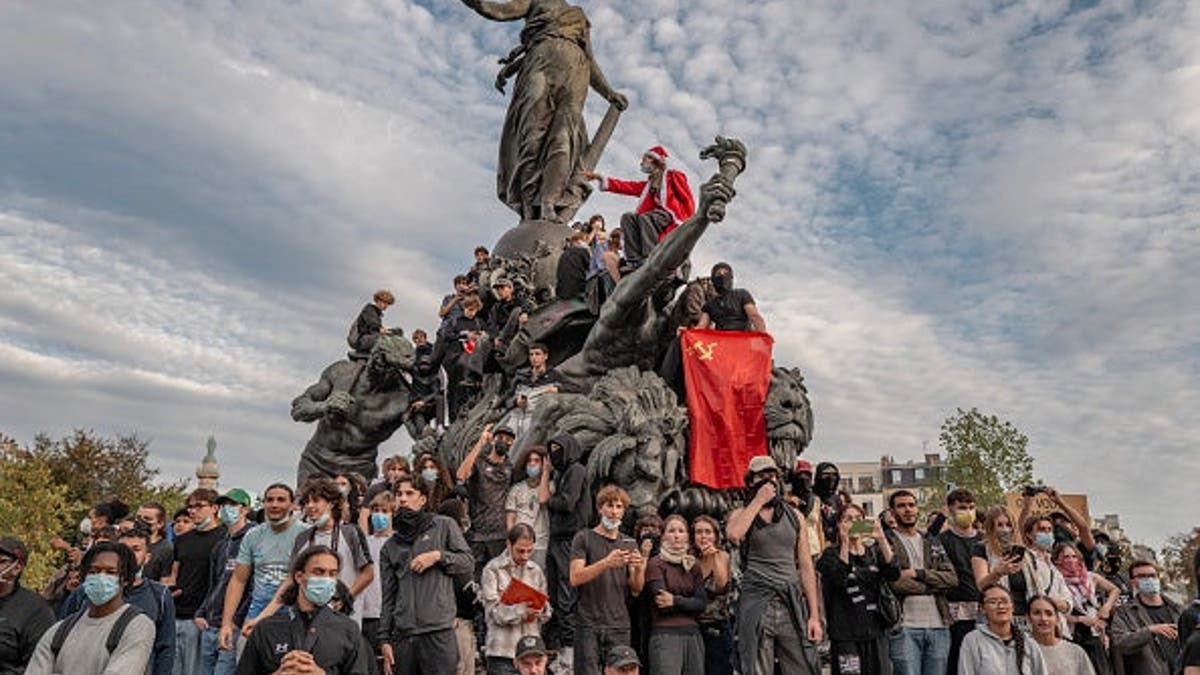
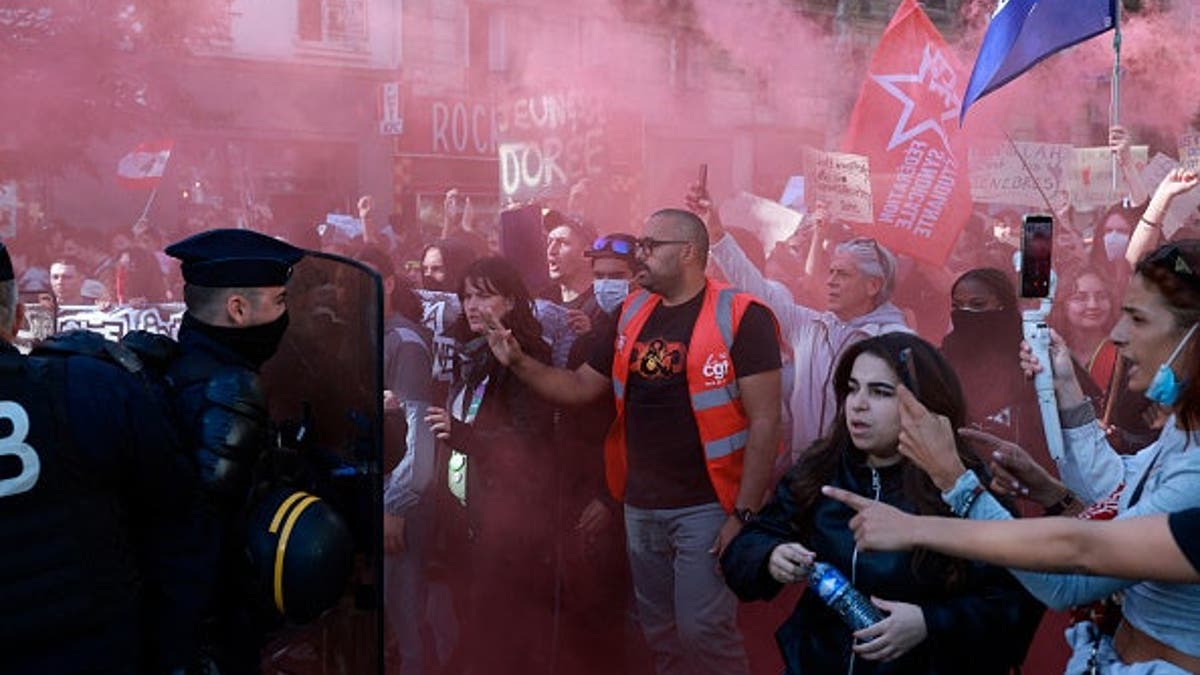
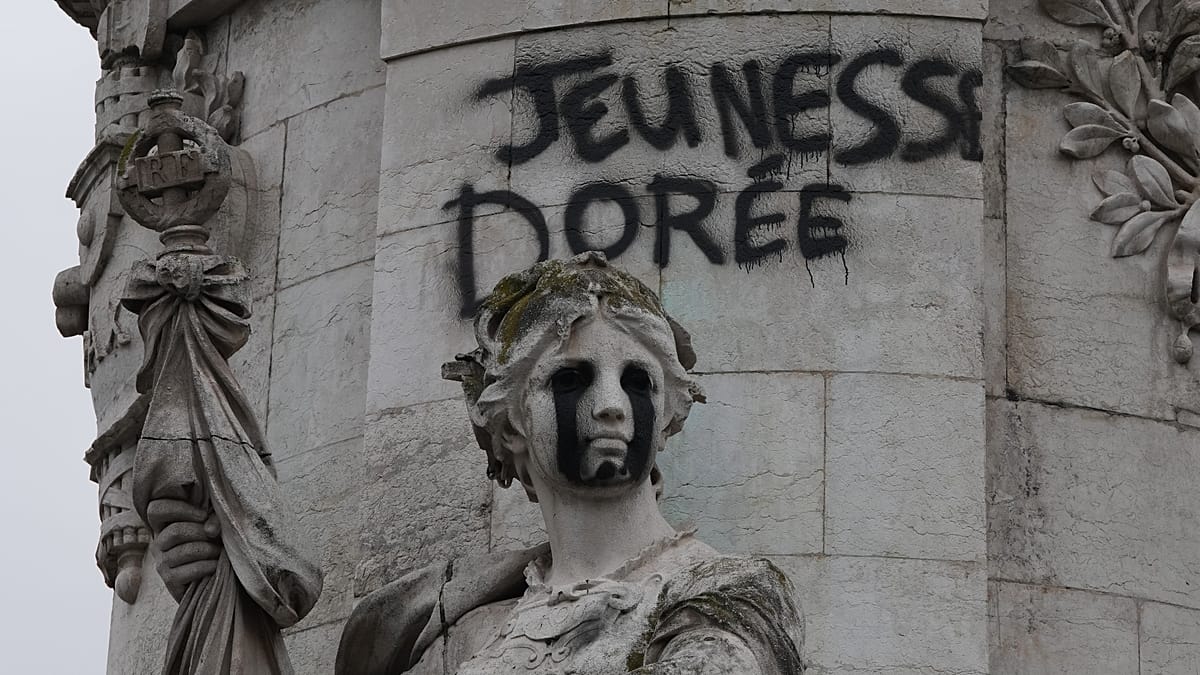
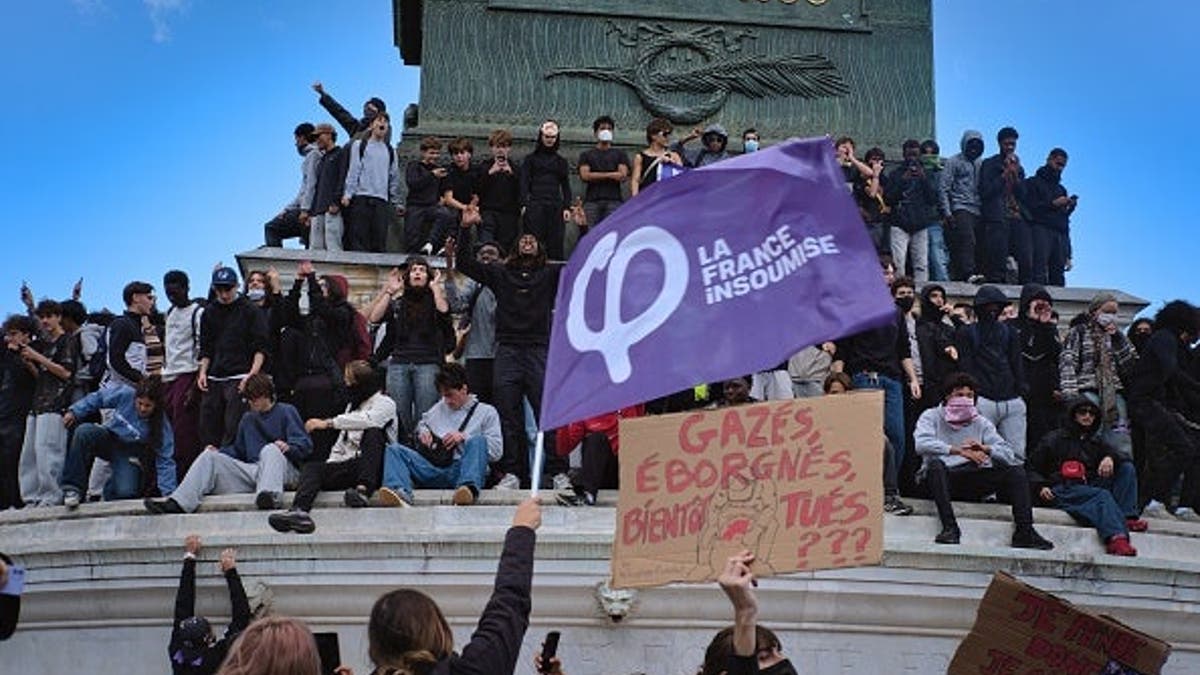
Students, unions, political parties, radical-left activists and opportunistic looters overlapped in the same protest environment but played different roles.
Originating mobilisation layer · 15/50 in Fox’s first dataset
School-condition grievances and education funding were the movement’s initial centre of gravity. Fox’s first published count identified 15 student/youth organisations among 50 total organisations in the broader ecosystem.
Labour federations and education unions called adult workers into the mobilisation. Yellow Vest and cost-of-living calls converged with the student movement ahead of 17 October.
Visible support · disputed responsibility for violence
LFI and Communist politicians visibly supported student actions. The government blamed far-left proxies after the violence; opposition parties challenged the evidentiary basis and the chief Paris prosecutor reportedly contradicted a broader attribution.
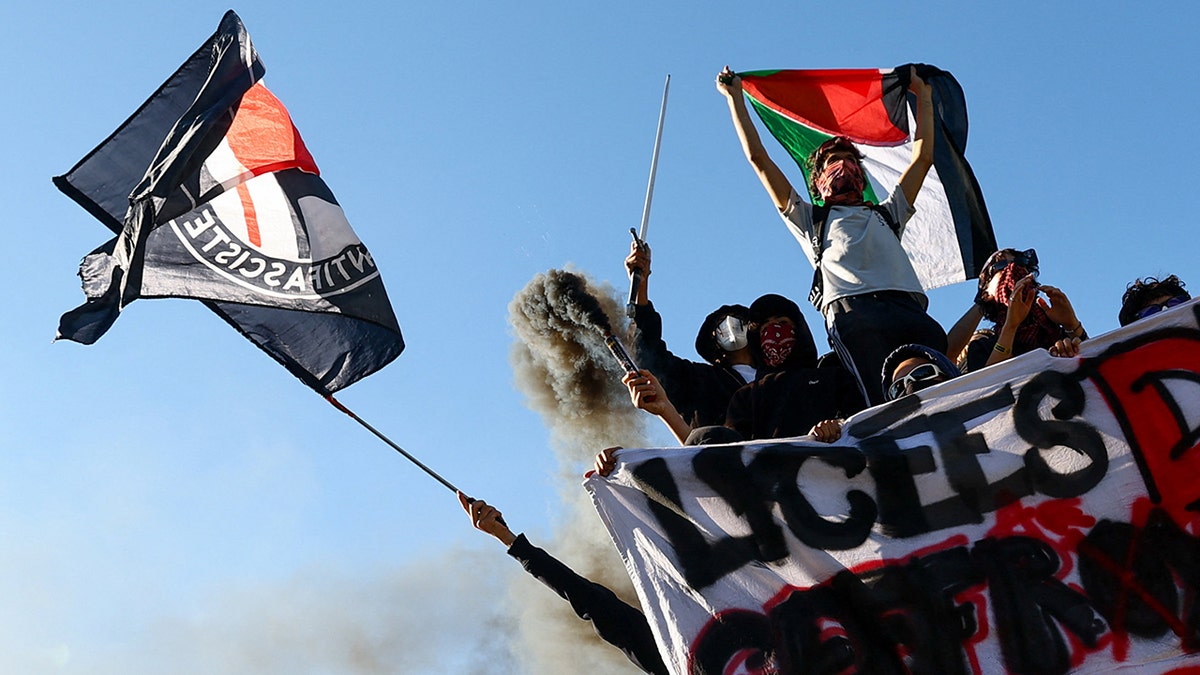
Authorities and reporting identify radical-left participation in some violence. AP cites an expert estimate of roughly 3,000 people in loosely structured factions—too small to explain the full scale of violence and looting alone.
EMF and local branches circulated calls to join the student mobilisation; RED Jeunes and Génération EDR broadened the framing toward anti-austerity, anti-racism, Palestine and policing. Reporting alleges AJ+ amplified overlapping narratives. The organisational and financial pathways remain unproven.
Opportunistic looters and unaffiliated violent actors
Distinct motive set · frequently collapsed into political labels
Experts distinguish symbolic attacks by ideological activists from acquisitive looting of sportswear and electronics. Treating every violent participant as part of one political organisation overstates coordination.
Actor cluster · historic grants versus current operational finance
The circulating “Soros-funded NGOs” claim contains some documented historical relationships, but the strength and relevance of each link varies sharply.
Historic funder · no demonstrated financing of these protests
Public grant records and organisational accounts document past support for several rights and advocacy organisations. The evidence reviewed does not show OSF financing the October 2026 mobilisation or violence.
OSF’s register records grants in 2016–2017 for police-practice, state-of-emergency and discrimination work. LDH Nantes later supported the 17 October mobilisation. The seven-to-nine-year gap and grant purposes matter: this proves a historic funding relationship, not protest financing.
Rights advocacy around policing · different funding paths
These organisations criticised police conduct or defended assembly rights. Documented OSF links concern international structures or broader programmes; the reviewed sources do not identify them as march organisers or show France-specific protest funding.
Mobilisation support · indirect or project-specific OSF links
350.org France joined mobilisation networks; an older annual report lists OSF support. ATTAC called for demonstrations, but the cited OSF connection concerns partial funding of a 2017 gas-policy publication—not the 2026 protest campaign.
Separate funding ecosystem · international amplification
Fox links BreakThrough News, CodePink, The People’s Forum and other organisations to Singham funding. The material demonstrates a transnational ideological media/activist ecosystem amplifying France; it does not document payments to French rioters or unified command of the unrest.
Transnational activists, officials and state-funded media reframed the same unrest for different audiences. The board distinguishes documented coverage and amplification from evidence of financing, operational coordination or causation.
BreakThrough News cast the protests as a historic anti-austerity or European youth uprising. Fox’s expansion from 50 to 101 organisations combines organisers, participants, supporters and amplifiers—useful network discovery, but analytically heterogeneous.
Documented narrative exploitation · no public proof of causing riots
Kremlin messaging framed the unrest as evidence of migration-driven European decline. France and the EU have documented persistent Russia-aligned FIMI capability, but current officials say no evidence publicly establishes foreign interference behind these events.
Repeated official messaging · operational claims unproven
Iranian officials repeatedly condemned French policing and urged Macron to heed protesters. Reporting also cites suspected Iran-linked amplification accounts; claims of paid agitators or operational control remain publicly unsubstantiated.
Macron: no evidence foreign powers caused the events; foreign information manipulation exploited them afterward. French officials identified hostile narratives linked to Russia, China and Iran. The EU said it lacked definitive confirmation sufficient for formal interference action.
Priority lead · media reach is proven; network direction is not
Al Jazeera and AJ+ repeatedly foregrounded school decay, policing and repression. Reporting says AJ+ videos reached millions and overlapped with narratives promoted by EMF, RED Jeunes and Génération EDR. This makes Qatar a priority media-network hypothesis, but does not yet prove funding or direction of the mobilisation.
High-volume state-media coverage · operational role unproven
TRT World and Anadolu produced a sustained stream, often syndicating the same reporting. Coverage repeatedly foregrounded school conditions, police repression and future mobilisation while also reporting fires, looting and arrests. Ankara’s pro-Palestinian posture supplies a strategic prior, but no reviewed evidence links the Turkish state to financing or direction.
AJ/AJ+ · TRT/Anadolu · Roya · Middle East Eye · checked 22 October
AJ/AJ+ sustained the clearest police-repression and youth-grievance frame. TRT/Anadolu published at high volume with a mixed grievances/violence frame. Roya carried a lighter anti-austerity convergence narrative. No indexed Middle East Eye coverage of this specific wave was found in the first search. Shared framing is observable; synchronized direction is not yet demonstrated.
Several individual Muslim-oriented social accounts were observed circulating near-identical claims that the French unrest—and protests elsewhere—represent Europeans rejecting alleged Zionist abuse. This is a potentially important narrative-propagation lead, not yet a coordination finding. Screenshots, account IDs, timestamps, earliest-use tracing and verbatim phrase comparison are required before attribution.
category
75%
Timeline · protest, escalation and narrative capture
Chronology beneath the governing question
The sequence matters: domestic grievances and mobilisation preceded the strongest international amplification claims.
21 October · Funding and foreign-activity claims surge
Second-order narrative contest
Historic OSF links circulate online as European officials discuss Russian and Iranian exploitation; the EU says evidence is insufficient for a formal interference finding.
23 October · Anti-Zionist convergence phrase observed
Social narrative lead · not yet attributed
Near-identical posts recast unrest in France and elsewhere as a European revolt against Zionism. The pattern is recorded as a collection lead pending screenshots, timestamps and network tracing.
category
75%
Methodology & evidence quality
Analytical safeguards
Poliscope separates observable participation, financial relationships, amplification, coordination and causation. Each requires different evidence.
Fox’s network map is discovery evidence, not command evidence
Method review · moderate confidence
Fox says it reviewed scores of articles, social posts and public statements. Its later 101-node dataset explicitly combines coordinating, organising and amplifying. That can show an ecosystem, but not by itself a shared command structure, money flow or responsibility for violence.
Visible association ≠ mobilisation ≠ orchestration
Causality safeguard
Flags, endorsements, reposts and attendance establish different levels of involvement. A defensible attribution needs time-ordering, operational communications, financial transfers or platform/network evidence—not visual co-presence alone.
LDH’s direct grants are old and purpose-specific; Amnesty’s reported link concerns the international structure; ATTAC’s concerns one 2017 publication. These are real links, but none presently demonstrates payment for October mobilisation or violence.
France’s protest wave began with genuine domestic education and cost-of-living grievances, then converged with unions, parties, radical-left actors, Yellow Vest mobilisation and opportunistic crime. Fox usefully exposes the breadth of the activist and media ecosystem, but its public method does not prove that the listed organisations jointly directed the riots. Historic Open Society links to several NGOs are real but heterogeneous and do not currently establish financing of this mobilisation. Russian and Iranian actors demonstrably exploited the unrest as narrative material. Qatar- and Turkey-based state media also shaped external interpretation through coverage, but the reviewed evidence does not establish an operational role. French and EU officials say there is not yet public evidence that foreign powers caused the events. The strongest current finding is layered convergence and opportunistic amplification—not a single hidden command centre.